

In the Present Tense
An historian reflects on why Americans still struggle to see Native people as contemporaries.
By Andrew Frank
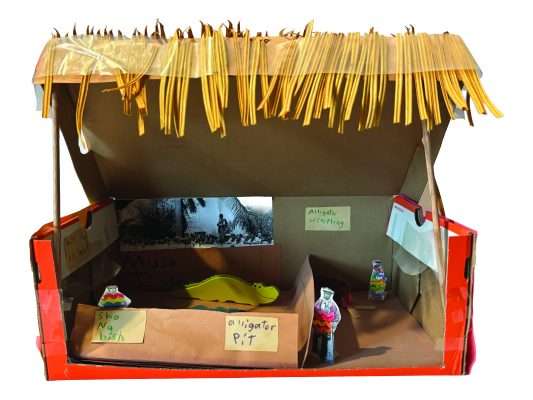
When my oldest child was in second grade, he came home with his school’s cherished “Native American diorama project.” The assignment was straightforward, artsy and rooted in problematic assumptions about Native Americans. Intended to satisfy the state’s mandate that students “compare the cultures of Native American tribes from various geographic regions of the United States,” the project was a school-wide affair that had been in use for more than a decade.
The task was simple enough. Students (and, as anyone who has raised a 7- or 8-year-old can attest, their parents) were asked to construct a three-dimensional scene depicting Native American life. Inside adult-sized shoeboxes, children recreated the culture of one of eight preselected tribes. The instructions encouraged them to describe how the tribe lives—present tense—and include details about housing, food, clothing and any other aspects of tribal culture they found interesting.
When Daniel showed me the assignment, he confidently announced that he had chosen the Seminoles because, as he put it, “You know a lot about them.”
I was all in. I grabbed my size-15 shoebox and sat Daniel down to begin planning. Our family had just returned from a trip to south Florida where we had visited the Seminole reservations at Big Cypress, Brighton and Hollywood. It wasn’t our first visit. We had been to Big Cypress a few times and met several tribal members, drove by dozens of homes, toured the Ah-Tah-Thi-Ki Museum and walked along its boardwalk.
Daniel also knew a bit about the Miccosukee Tribe. On another family trip, we went into the Everglades with Buffalo Tiger’s Airboat Tours. Thanks to our Miccosukee guide, Daniel gained an appreciation for the liquid land, its sawgrass and alligators, the eerie silence of the wetlands when the engine was off, and his ear plugs when the engine was on. He listened as our guide talked about how the Miccosukee see themselves as the stewards of the Everglades, the importance of water and wetlands to the Miccosukee people, and the ways that the water has changed over the years.
More importantly, Daniel saw Native communities as they exist today. He knew that most Seminole and Miccosukee families lived in modern homes built of cinderblocks, even if traditional chickees remain visible in backyards and communal spaces. He saw patchwork clothing, admired dugout canoes displayed in museums, and learned about various cultural traditions.
But he also saw that the people he met carried iPhones, drove pickup trucks and cars, and navigated the same modern world as most other Floridians. He knew that the Seminole and Miccosukee people were not relics of the past but contemporary communities with deep roots in the state.
Legos, reality and perception
As our planning for the diorama project began, I knew that Daniel would roll his eyes when I asked him to get an armful of Lego bricks and a Matchbox car. I asked anyway and was right. When faced with the choice of portraying modern Seminoles rather than historical Seminoles, he dismissed the idea immediately. “I’m not getting out my Legos,” he told me. “That’s not what my teacher means.”
Daniel couldn’t quite verbalize it, but his response revealed a disconnect between reality and perception. The assignment asked students to describe Native American life in the present tense, yet everyone assumed that it was asking them to depict a distant past. Academics call this outdated trope the “ethnographic present,” a convention that portrays Indigenous communities as if they were frozen in time before any of the changes brought on by colonialism or globalization. It explains how the prompt could be expressed in the present tense: Describe how they live. But the presumption would be the project was about the past: Describe how they lived.
After my rather heavy-handed lesson, we moved forward. Daniel was drawn to a series of ideas he had learned on his trips to South Florida, and he wanted to include as many as he could. He remembered a painting of the 19-century leader Micanopy and rattled off a wish list of items to add to the diorama: patchwork clothing, an airboat, cattle herds, a chickee, alligator wrestling, Seminole dolls, a four-logged fire, deer hunting, canoes, ball game and woven baskets.
It was more than any one shoebox could possibly hold and more than our artistic skills could handle.
It was also more than one historian could fully capture.
Once again, our father-son time turned into a professor-student lesson. The problem was not simply that Daniel wanted to include too much; it was that he wanted to combine elements from very different historical moments. I told him he needed to choose the Seminole era he wanted to recreate. The world of Micanopy in the early 19th century was not the same as the tourist camps, patchwork clothing and alligator-wrestling attractions of the early 20th century. Neither reflected the lives of Seminoles today.
Daniel settled on the 1920s. He wanted to include patchwork clothing, or at least the colorful rickrack that he could purchase at Michael’s, and a South Florida tourist camp. Using a photograph from an exhibit we had visited at the Museum of Florida History, he set about recreating the scene as best he could.
In the end, the assignment was not without merit. Through his classmates’ projects on the Pueblo, Navajo, Cherokee and Seminole people, Daniel learned a lot about Indian Country. Collectively, the dioramas challenged some of the stereotypes that flatten diversity within Native American cultures into a single, undifferentiated identity. He learned that different Native nations occupied different homelands, spoke different languages and adapted to different environments. The dioramas taught him that some communities lived in teepees, while others built longhouses, wigwams or chickees. Some inhabited deserts; others lived in forests, wetlands or grasslands. Differences in clothing, transportation, architecture and foodways became visible in ways that second-graders could easily understand.
The weight of stereotypes
Over the next several years, as my two younger children advanced to second grade, they completed their own versions of the same assignment. As I watched each project take shape, I realized that my discomfort with the lesson reflected something larger: my frustration with the powerful stereotypes embedded in popular culture.
I first encountered this problem as a graduate student. At the time, I was immersed in a body of scholarship wrestling with a question that now seems astonishing: Were the so-called Five Civilized Tribes of Oklahoma “real Indians”? The question emerged because too many scholars carried narrow assumptions about what Native authenticity looked like. When these scholars encountered Native communities that practiced Christianity, spoke English, operated centralized governments, or, in some cases, owned enslaved people, they struggled to reconcile those realities with their expectations of Indigenous culture.
Historian Philip Deloria, a citizen of the Yankton Dakota Nation, captured the phenomenon in his influential book Indians in Unexpected Places. Deloria argues that Americans are often surprised, even disoriented, when Native people appear in modern settings. The surprise itself reveals an assumption: that Native Americans belong in the past.
Daniel’s diorama assignment reflected the same difficulty. Students and teachers had no trouble imagining that Seminoles, Navajos or Cherokees had histories. The curriculum included discussions of the Trail of Tears, Indian wars, and even Pocahontas. Students readily understood that Native people lived in pre-Columbian North America, colonial times and the 19th century. What proved much harder was imagining Native people in the present.
Teaching the present
When Daniel’s teachers learned about my research, they invited me to speak to the second-graders. It gave me an opportunity to have the same discussion with dozens of students and several teachers that I had already had with my son. I hoped, at the very least, that I’d be able to convince the teachers to rethink their instructions and break away from the stereotypes of the “ethnographic present.”
When I visited the classroom, though, I found that the discussion flowed easily—as long as it stayed in the past. Living in Tallahassee and in the shadow of Florida State University, many students were familiar with Osceola and the Seminole Wars. They knew the broad outlines of the Thanksgiving story. I think everyone but Daniel had seen Disney’s “Pocahontas.” They were fascinated to learn that Micco was not merely the name of the mischievous raccoon in the film but a Creek/Seminole word meaning “leader” or “chief.”
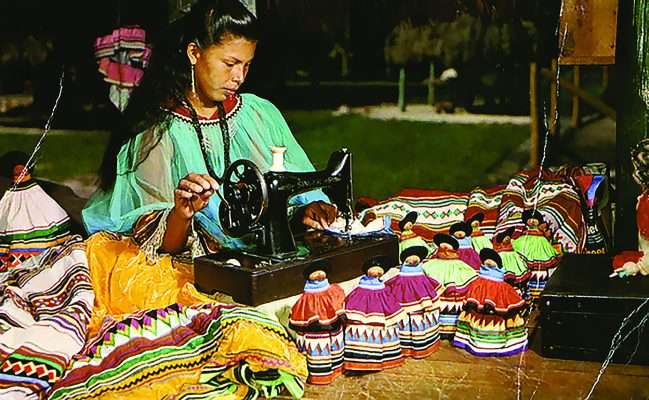
Yet when the conversation shifted to the present, the room became noticeably quieter. They could talk about Native Americans as historical actors, but they struggled to view them as neighbors, citizens, professionals, artists, business owners or political leaders. They had difficulty talking about Native culture as something that evolved over time: that the introduction of Singer sewing machines at the turn of the 20th century gave birth to the patchwork tradition, that alligator wrestling was not an ancient occupation, or that Seminoles and Miccosukees had tribal governments and sovereignty.
After a few minutes of awkward conversation, it became clear that the old myth of the “Vanishing Indian” remained remarkably powerful. For centuries, non-Natives have imagined Indigenous peoples as perpetually on the verge of disappearance. One of the most influential expressions of this idea appeared in James Fenimore Cooper’s The Last of the Mohicans, a novel published in 1826, which helped socialize the notion that Native Americans were destined to fade away before the advance of American civilization. These beliefs did more than shape popular culture; they rationalized removal policies and the seizure of Native lands.
In her book Firsting and Lasting: Writing Indians Out of Existence in New England, historian Jean O’Brien demonstrates how Americans repeatedly place Native people in the past. Communities celebrate the first settlers, the first schools and the first churches while simultaneously mourning the “last” Indian. “Squanto was the first last Indian,” she writes, “but he was decidedly not the last.” The idea of the last Indian exists throughout American culture and history, and the effect is always the same: Native people become symbols of a vanished past rather than participants in an ongoing present.
Invisible in plain sight
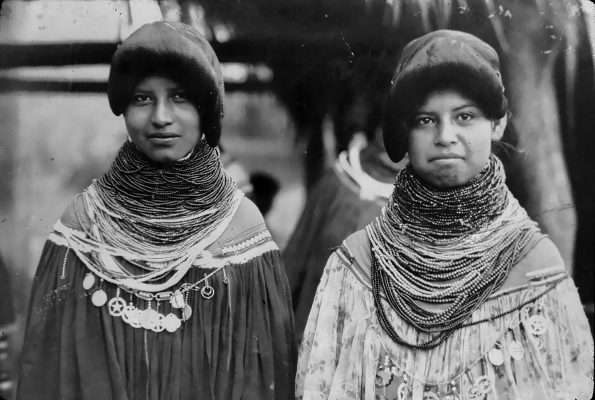
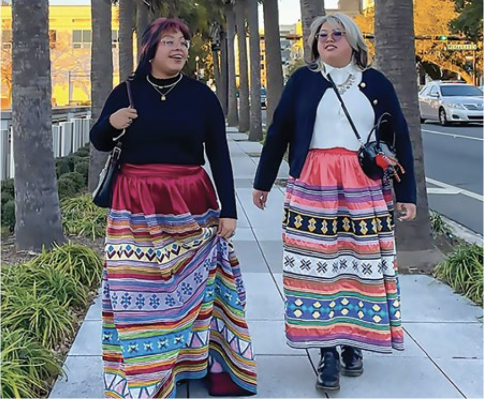
That assumption shaped my conversation with the second-graders and influenced the diorama project. To the students, Native Americans were understood as historical and fictional figures, but not as vibrant communities whose cultures, economies, governments and identities have evolved over time. It was as though Native Americans had a history but no present.
Despite it all, when I look back on Daniel’s diorama, I am struck by the simple fact that he and his teachers knew far more about Native Americans than I did at his age. I’m embarrassed to admit it, but it was not until I was a young adult that I really understood that I had grown up in the shadow of the Seminole and Miccosukee tribes. Until then I knew what Native Americans were, but I did not understand what it meant for them to live in the present, that their cultures were living rather than frozen in time, and that concepts such as tribal sovereignty shaped everyday life.
I am still not entirely sure why those blind spots persisted. I grew up in Broward County during the 1970s and 1980s, when issues involving tribal sovereignty, water rights, tax-free cigarettes, bingo and gaming regularly appeared in the news. Seminoles and Miccosukees were not distant historical figures; they were my neighbors. In hindsight, I know I saw evidence of their presence everywhere.
My father worked in Hollywood, Florida, only a few blocks from the Seminole Tribe’s headquarters and bingo hall. As a child, I remember visiting a “Seminole village” where I rode the Jungle Queen riverboat, watched alligator wrestling, and admired patchwork clothing and woodcarving demonstrations. I attended Seminole Middle School in Plantation. Family trips routinely took us across Alligator Alley and along the Tamiami Trail past Indian villages. In high school, I regularly drove by a Seminole “smoke shop” while visiting friends in Hollywood, and trips to Miami often carried me through or alongside the Miccosukee Reservation.
Native people were part of my childhood. They sat in the stands at high school football games. Sometimes they were on the field or in the marching band. I remember signs marking reservation boundaries and speed limits that changed as drivers crossed onto tribal lands. I still laugh when I think about my older brother’s ticket for “excessive use of the horn” after he honked at friends while driving through the Miccosukee Reservation more than 40 years ago. Yet despite all those encounters, contemporary Seminoles and Miccosukees remained strangely invisible to me.
I should not have needed graduate school to teach me that the Seminoles did not wear the Plains-style headdress painted on the exterior of my middle school. I should have questioned why our auditorium was named a “kiva,” appropriating a sacred Pueblo ceremonial space that had little connection to Florida. Most of all, I should have understood that phrases such as “modern Seminoles” and “contemporary Miccosukees” were not contradictions. Native Americans were not simply historical figures. They were alligator wrestlers and electricians, artists and entrepreneurs, students in my classes and musicians in the school band. Even my brother’s traffic citation was a reminder that tribal sovereignty was not an abstract legal concept but a lived reality.
Native America in the American imagination
The Smithsonian’s Americans exhibit from the National Museum of the American Indian, which is touring Florida this year, is not a biography of my childhood. Yet its central message resonates deeply with my own experience. The exhibit explores how stereotypes and popular imagery have obscured the continuing presence of Native people in American life. In the process, it invites visitors to confront a paradox that lies at the heart of American culture.
We often equate Native Americans with the loftiest ideals in American society. Even though they suffered greatly in the name of American expansion and development and their contemporary realities are ignored, they frequently appear as quintessential symbols of “life, liberty, and the pursuit of happiness.” By safely segregating Indigenous people into the past, Americans can celebrate their warrior traditions as inspiring rather than threatening to the “American way of life.” In this way, non-Natives can freely use the present tense when they talk about Indigenous culture and appropriate it as if it was their own.
Native histories are commemorated, their images appropriated and their traditions admired, but often only insofar as they can be detached from living Native communities. Americans are comfortable invoking Indigenous peoples as symbols of freedom and courage because they imagine them as belonging to an earlier era rather than the present.
The result is a peculiar form of visibility: Native Americans are everywhere in American culture and yet often absent from Americans’ understanding of contemporary life.
Signs of change
Despite it all, I find myself more hopeful than I once was that Americans can move beyond these stereotypes and misconceptions.
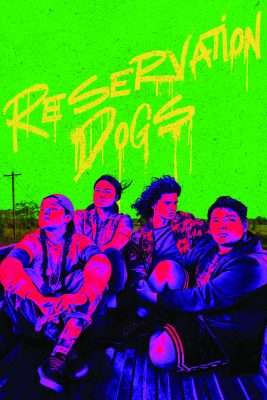
Since Daniel completed his diorama nearly 15 years ago, I have watched attitudes slowly change. Students are less surprised to learn that the classmate portraying Osceola at Florida State football games is a citizen of the Seminole Tribe of Florida or the Miccosukee Tribe. More students recognize that Indigenous art can involve a Fender guitar, a film camera or digital media just as easily as beadwork or basketry. Fewer arrive in my “History of the Seminoles and Southeastern Indians” course assuming that Native American history ended with removal in the 1830s. They come interested in Everglades restoration, tribal gaming and television shows like “Reservation Dogs.” They, like Daniel, are increasingly aware of Native people as participants in both the past and the present.
Opportunities to encounter contemporary Native life remain all around us. They are in the Miccosukee Indian Village near Miami and the Seminole Tribe’s Ah-Tah-Thi-Ki Museum on the Big Cypress Reservation, in powwows, rodeos, cultural festivals and other tribal events. The challenge, as it was with Daniel’s diorama all those years ago, is to see Native people as part of the same modern world we all inhabit.

Andrew Frank is the director of Florida State University’s Native American and Indigenous Studies Center. He is the author of Before the Pioneers: Indians, Settlers, Slaves, and the Founding of Miami and the book Creeks and Southerners: Biculturalism on the Early American Frontier.